
The Marriage Question
Heteropessimism and the truth universally acknowledged


Over the past year or so it has become more and more clear that incels are among the greatest influencers of current internet culture. In the end, 4-Chan won, because everything is 4-Chan now. There is nothing that cannot be maxxed or mogged in this glorious age of the internet.
Looksmaxxing is a good example of a term some people may not realize is incelese, because like most incel verbiage it’s frankly ridiculous in a way it’s hard to associate with a movement that has at this point led to several mass shootings. Looksmaxxing comes as part of the “black pill”, the idea that women are hypergamous— meaning only attracted to the upper echelon of men— and that any average looking man you see with a girlfriend is being used for his money. It’s one of both the most critical and most flimsy parts of the incel ideology—something taken as a fundamental, unshakeable, downright biological truth that you can also see disproven the second you log off and step outside. There are plenty of average looking, average earning men who are getting laid and even loved. But, to the incel, this would mean that the fault lies not with women, but with you. Even scarier, it might mean that you could find love, and this painful truth you have let rule your life is actually a delusion keeping you from being happy. It’s a sunk cost fallacy. If you wake up tomorrow and realize women really could love you, it means you’ve wasted all these years being angry when you could’ve been happy. Or worse— there may have been a point when you, as a medium-ugly/medium-poor man could’ve found love, but your years of believing otherwise and blaming women for it have made you too angry and spiteful, and now you are just as unlovable as you convinced yourself you were all those years ago.
But I digress.
Women have always been told they need to looksmaxx to get a man, but now there is a wave of female influencers who are telling girls to embrace it. Get hot, marry rich—I’m surprised that hypergamy hasn’t yet been adopted by these “divine feminine” man-eater influencers yet, but I suppose fake greek just reeks of boys. These women have risen to the challenge set by the incels: you told us who you think we are, so that’s who we’ll be.
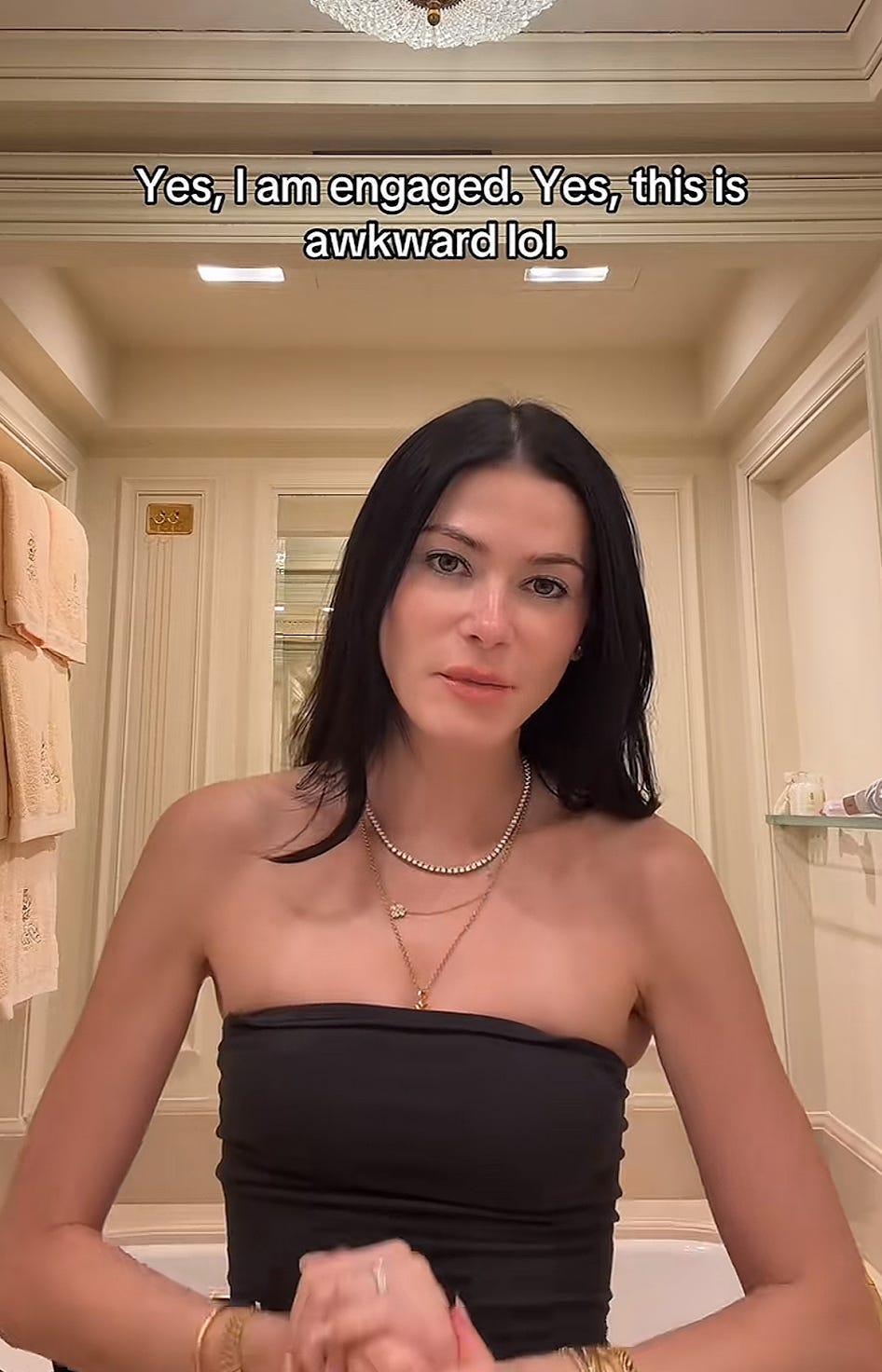
Enter MJ Gray. She recently went viral after revealing (maybe confessing?) that she is now engaged, something that came as a betrayal to her audience who seem to have viewed her as an anti-marriage advocate. But this isn’t strictly true— MJ Gray regularly advocated for women to get married. She was anti-love, but very much pro-marriage. She spoke about marriage as an economic necessity if you were stupid enough to allow a man into your life. In wording that evokes both a televangelist sermon and a finance bro’s coke rant she said, “I’ve never met a man who was not driven by his lust […] I think if I am going to enter some kind of relationship with a man I have to be getting some kind of collateral […] I need to look back at our relationship together and feel like I got something out of it for when and if you betray me and waste my time”. Notably, MJ Gray does not consider love collateral.
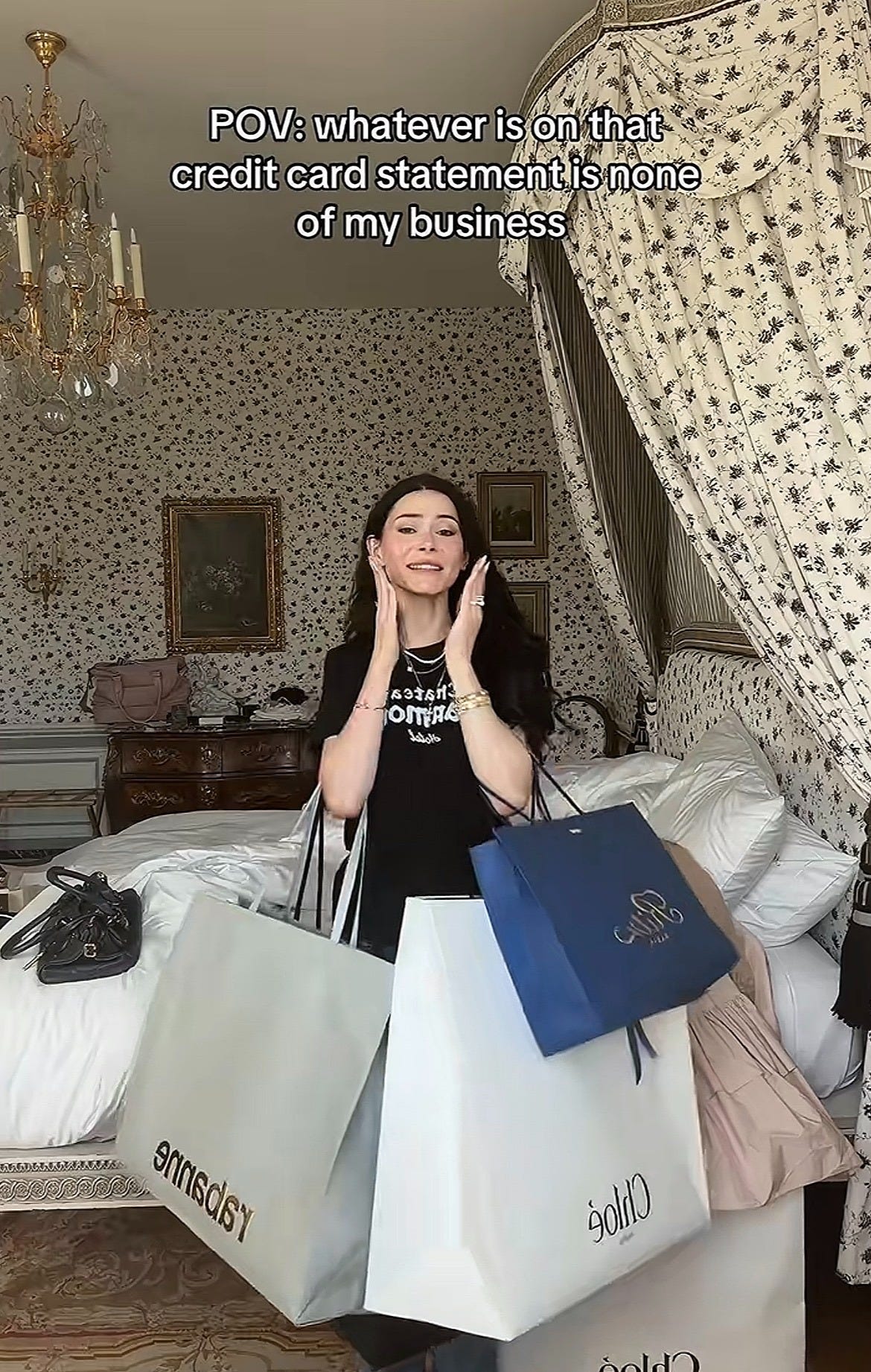
MJ differs from some of these influencers for having, at least at one point, advocated for women not depending on a man financially: “If you marry a rich man your life will be controlled by him, it’s not worth the Chanel bags […] avoid getting married, make your own money, live your own life”. But this rhetoric shifted to marriage being the smart economic choice for any woman considering something as foolish as partnership, and has now evolved to marriage as a sort of career, the same “soft life” economic trap that so many less interesting women before her have promoted, which I have written about before. I heard of MJ Gray this week because she got engaged, to a man, who she now makes videos praising for buying her things, who she defends her engagement to on Tiktok in a video where she never says the word “love”. Has she become the kind of woman she used to mock, someone who thinks that she is above being hurt or cheated because she found the one truly good man? Or has she finally found a relationship with enough “collateral” that it makes good business sense? I don’t know, neither do her outraged followers in the comments, and maybe neither does she.
And this is ultimately how this genre of “misandrist” influencers differ from other heteropessimistic movements like 4F or political lesbianism— they are not telling you to abandon heterosexuality because of the harm it’ll cause you, they are telling you to embrace it. Every man will try to hurt you, so become someone who can’t be hurt. As Asa Seresin said better in On Heteropessimism: “heteropessimism is anticathartic. Its structure is anticipatory, designed to preemptively anesthetize the heart against the pervasive awfulness of heterosexual culture as well as the sharp plunge of quotidian romantic pain.”
So here we have it, the two sides of heteropessimism. While not equivalent (there have been no “sprinkle sprinkle” mass shooters to my knowledge), there are a growing number of women content to Lie Down And Rot, to submit to a man they can never love or trust, just as incels commit themselves to a world where anyone who loves them will be using them for their money or the face they hit themselves with a hammer to perfect. Two groups of people who have condemned themselves to a lonely half life where the half of the population they might find themselves attracted to are a group of people completely unworthy of their respect.
But I am not interested (today at least) in discussing heteropessimism and TikTok faux-misandry because it has been done to death and I am bored of it. What I want to ask today is something I haven’t seen come up in the discussion of MJ Gray and others like her. One thing that “man-haters” like MJ Gray, judgey teenagers in comment sections asking why you’re still a girlfriend after x years, and catholic convert trad wife influencers all agree on: it is foolish to invest time and resources into a man without getting hitched. It is treated as fact that marriage offers security, that whether you’re a cynic or a romantic it is the best deal for women. But my question is this:
Why do you think marriage makes a woman safe?
It’s an interesting phenomenon—these women regularly emphasize the importance of marrying a man for security, while the men of the manosphere love to dangle the idea of marriage over women’s heads and never commit to it, calling it too dangerous, a bad deal for men. But something that seems to have been lost in the conversation since the second wave is that marriage has always been a better deal for men.
The men of the manosphere’s primary issue with marriage is the idea of alimony, and in a way they’re not wrong— the fight for women to receive alimony was an important one, and establishing rights for women in divorce was a hard won victory, but it was established as a priority at a time when women had very few options for income of their own, meaning that the dissolution of a marriage meant a complete loss of support for most. Abandonment was cruel beyond belief, and leaving was unthinkable. Alimony was not meant to be a weapon or career path, it was the bare minimum for survival. Divorce was the victory, and alimony was a factor that made it possible. The purpose of alimony was not to make men scared to leave, it was to make women able to survive if they did.
Men still typically outearn their partners, although women are now the bread winners roughly 1 in 4 relationships. You could attribute this to hypergamy, or the wage gap. You could also attribute this to male insecurity around dating a woman who outearns them. You can of course find countless articles of men asking for advice about what to do if their partner makes more money than them, and it’s a fertile topic for gotcha street interviews by the same men who probably criticize women for looking for wealthy partners. There is an expectation that women will be to some extent financially reliant on their partners, and there is extreme judgement even from other women online when this is not the case. The comment sections on videos where it is revealed women go “50/50” (or worse) are downright vitriolic, even if it’s revealed that the men in turn takes on the bulk of domestic labour, something we recognize as a fair trade when it’s the man earning the money. There is more vulnerability being financially dependant on a man, but instead of seeing this as a sacrifice it as seen as proof she’s truly loved. Couples where a man outearns his wife are the least likely to end in divorce, but is that because the women are less likely to want to leave, or less likely to be able to?
There is a reason women being allowed to open bank accounts in the 70s is so frequently cited as a pivotal feminist victory. The right for women to work and be compensated for their labour is arguably the basis of second wave feminism. If these women truly cared about de-centreing men, why are they encouraging women to enter the precarious financial arrangement that is marrying rich? An arrangement that by definition forces you to centre your life around the man who funds it? They frequently cite getting married as if it is a magical protection, and spurn women who have children or buy property out of wedlock. But marriage is no longer the only form of legal protection women have, nor is it even necessarily the strongest. Given how abusive men weaponize the court system, I do not find the concept of a marriage licence particularly comforting. Second wave feminist Carol Smart described marriage as “patriarchy’s ideological armament through which women became hooked into dependent relationships with men, entered into an unfavourable legal contract (namely marriage) and ultimately ended up with care of the children.” Smart argued that the law, namely family courts, were a form of male control over women, and that addressing women’s economic dependence on men was key to the success of the feminist movement and woefully unaddressed by marriage laws. The wealthy men these women encourage you to marry have prenups, and lawyers, and the ability to drag out a settlement until your bank account is empty and your spirit is broken. Divorce is costly! The average uncontested divorce in the UK costs £1500-3000, but can easily go up to £50,000 if it is contested. I would infinitely rather be in a relationship I can leave at any time with no legal ties than be trapped in court with a man.
Being someone’s baby mama can leave you broke and alone, but so can being someone’s wife. In a video on MJ Gray’s tiktok, a woman explains that men also “baby trap women”— she notes that in multiple states women are not allowed to file for divorce while pregnant, and as such men will keep their wives legally bound to them by “keeping them pregnant”. And yet women, including MJ Gray herself, will tell you that having a baby out of wedlock is the most foolish thing a woman can do. While stats say married women are less likely to experience abuse, marriage does not wholly protect women from violence— lest we forget that marital rape was legal until the 90s, and a survey found 1 in 4 people in the UK did not believe marital rape is a crime, including 16% of those aged 18-24.
It used to be something of a given among self-proclaimed misandrists that marriage was a bad deal for women. It may be an unfair comparison as the feminists arguing against marriage were presumably sincere in their beliefs and not influencers generating ad revenue, but many of them were still married. (Hell, I may well get married someday. Much like dating men and eating meat, marriage is something I am morally opposed to but not necessarily ready to give up).
I am not claiming, as some people have, that these women’s attitude towards men is equivalent to the incel attitude towards women: one group is reacting to a lifetime of structural victimization, while the other is reacting to perceived rejection from something they feel entitled to, and while one group is reacting with cynicism the other is reacting with violence. It is not women upholding this vicious cycle. My point is that both these groups are espousing rhetoric that further upholds the patriarchal status quo, that poses heterosexual relationships as a necessary evil, and that encourages both women and men to seek out transactional relationships with people they cannot love or respect, relationships that leave women financially reliant on men who they hate or who hate them. While I feel sorry on some level for the men in these situations who have been brainwashed to believe that they can never be loved, that half the population are succubae who hate them and cannot be trusted, my primary concern is and will always be the fate of women as a social class, and that is who I am concerned for here. The fact that women are being sold, by both men who hate them as well as women who claim to be protecting them, the idea that entering a legally binding contract with the person most likely to kill you is the greatest form of security you can have, makes me really fucking queasy.
That being said, please do still invite me to your wedding.

How to Do It Like a Total/High Value/Submissive Woman

Recently, I’ve seen a wave of girls on social media expressing their desire to get a “soft life”, free from a 9-5 job and the trappings of modern womanhood under capitalism. Understandable, even admirable, as someone who, personally, hates work with the passion of the grandpa from Charlie and the Chocolate Factory who chose to be bedridden for a decade …
Exactly. The assumption that marriage automatically makes a woman safe is doing so much unpaid labor in these conversations.
Marriage can be beautiful with the right man. But marriage itself is not a force field. It doesnt magically turn a selfish man generous, a careless man considerate, or a domestically useless man into a partner. A ring isn't protection if what it protects is his access to her labor.
This is why I think more women are getting sharper about the question. Not “Will he marry me?” but “What does marriage to him actually cost?”
love your brain 🫡😚